Within the novel Jane Eyre, there are very strict social boundaries that can be detected. Social standing from the orphan Jane, to a rich upstanding Edward Rochester are displayed.
For the first half of the novel, a strict class system mind set comes into play. Jane is treated with disrespect by her Aunt Reed, and her cousins. Not wanting the burden of such a 'disgraceful' child, Jane is sent to Lowood boarding school. While there, Mr. Brocklehurst, the owner of the school emphasizes Jane's, as well as the other girls' social positions. They are fed next to nothing, clothed in rags, and are schooled in dreary, cold classrooms. The realization of such harsh class division is clearly shown when Jane and her dear friend Helen happen to catch a glimpse of Mr. Brocklehurst's daughters one day. The two girls are dripping in wealth in the form of magnificent silk dresses and beautiful jewellery. Brocklehurst is undoubtedly "well-off", yet he chooses to treat young girls in such a crude manner. He even goes to the lengths of demanding that hair from a naturally curly-haired girl be cut off, so they would remain uniform.
This unfortunate way of thinking only swept Jane up in it's turmoil for so long, until she finally broke free. However, her case is a rare one, especially in the times that Bronte wrote this novel. "Worth by Association" was the motto, and many were doomed to their destiny at a very young age.
Wednesday, 4 January 2012

Two Worlds Collide
 "By dying young, I shall escape great sufferings. I had not qualities or talents to make my way very well in the world: I should have been continually at fault."
But where are you going to, Helen? Can you see? Do you know?"
"I believe; I have faith: I am going to God."
"Where is God? What is God?"
"My Maker and yours, who will never destroy what he created. I rely implicitly on his power, and confide wholly in his goodness: I count the hours till that eventful one arrives which shall restore me to him, reveal him to me."
"You are sure, then, Helen, that there is such a place as heaven; and that our souls can get to it when die?"
Bronte's characters like Helen Burns (above) and St. John Rivers directly reflect her religious beliefs. Bronte grew up under the influence of her father, who was an Anglican minister. She grew up believing in her faith wholeheartedly, and her beliefs leaked into her art.
The character Helen Burns is the one who shows the most faith in her belief in God, and heaven. Helen assures Jane that she will be with God when she dies, and that even though she is dying, she rejoices in the fact that she will meet her Creator.
All three of Bronte's siblings passed away before she did, and the message of hope in the life after death could easily be assumed to be a comforting reassurance to Charlotte as she watched her siblings go.
An artist, be it through writing, painting, acting, and so on, cannot separate their lives from that of their imaginary worlds. Artists are passionate people, and cannot escape to either "world" without bringing with them, pieces of the other.
Beating The Odds
Jane Eyre, the heroin in her self-titled novel is a charismatic, stubborn, amazing woman. In society's eyes, she is a hopeless orphan, doomed to a life of disappointment and neglect. However, Jane Eyre has a happy ending, where she rises out of the ashes and basks in her true potential.
At a young age, Jane is labelled - by a man by the name of Brocklehurst - a devilish child. She is sent away to school to "fix" her behaviour. However, Jane finds herself under intense scrutiny by the other staff and students. Living under the label of a liar and un-fixable, Jane does all that she can to maintain her character, and prove to whoever that would listen, that she is nothing of the sort.
As the novel progresses, Jane gains the respect of many, and her former titles fall to the wayside. The novel ends with the reader experiencing a new Jane, the polar opposite of how she began. A happier, stronger woman.
Charlotte Bronte depicts, quite magnificently, the growth of Jane to represent feminine empowerment. Her characteristics of strength, courage, perseverance and hope for a brighter future are inspiring.
This trailer from the 2011 film adaptation displays quite well the hardships that she face throughout her lifetime, but saves the happy ending for it's viewers.
Where you are from does not determine what you will become.
At a young age, Jane is labelled - by a man by the name of Brocklehurst - a devilish child. She is sent away to school to "fix" her behaviour. However, Jane finds herself under intense scrutiny by the other staff and students. Living under the label of a liar and un-fixable, Jane does all that she can to maintain her character, and prove to whoever that would listen, that she is nothing of the sort.
As the novel progresses, Jane gains the respect of many, and her former titles fall to the wayside. The novel ends with the reader experiencing a new Jane, the polar opposite of how she began. A happier, stronger woman.
Charlotte Bronte depicts, quite magnificently, the growth of Jane to represent feminine empowerment. Her characteristics of strength, courage, perseverance and hope for a brighter future are inspiring.
This trailer from the 2011 film adaptation displays quite well the hardships that she face throughout her lifetime, but saves the happy ending for it's viewers.
Where you are from does not determine what you will become.
Mother Dearest
"I resolved, in the depth of my heart, that I would be most moderate … I told her all the story of my sad childhood. Exhausted by emotion, my language was more subdued than it generally was when it developed that sad theme; and mindful of Helen’s warnings against the indulgence of resentment, I infused into the narrative far less of gall and wormwood than ordinary. Thus restrained and simplified, it sounded more credible: I felt as I went on that Miss Temple fully believed me."
 There are many characters in Jane Eyre that play a significant role in the growth and development of Jane's character. One of these characters, possibly the most important is Miss Temple. Working as a teaching assistant at Lowood school, Miss Temple sees a potential in Jane that all others seemed to neglect. She quickly earns Jane's trust and becomes source of shelter (Temple, get it?). Jane sees Miss Temple as a role model, and is inspired to become a teacher herself. However insignificant it may seem, Jane's small amount of time spent at Lowood under the influence of Miss Temple was a catalyst for the change of heart we see in Jane later on in the novel.
Miss Temple is the only real motherly figure that Jane has ever known. Her kindness reaches Jane's very core, and she is really the one to be thanked for the entire future of Jane Eyre, inspiring her to become a teacher, and assuring her that the world is not as cruel as she might believe it to be. Miss Temple cared. She was not over the top, smothering Jane with gifts or affection. She simply believed in her, and helped her to listen to, and answer the whisper in her heart.
There are many characters in Jane Eyre that play a significant role in the growth and development of Jane's character. One of these characters, possibly the most important is Miss Temple. Working as a teaching assistant at Lowood school, Miss Temple sees a potential in Jane that all others seemed to neglect. She quickly earns Jane's trust and becomes source of shelter (Temple, get it?). Jane sees Miss Temple as a role model, and is inspired to become a teacher herself. However insignificant it may seem, Jane's small amount of time spent at Lowood under the influence of Miss Temple was a catalyst for the change of heart we see in Jane later on in the novel.Miss Temple is the only real motherly figure that Jane has ever known. Her kindness reaches Jane's very core, and she is really the one to be thanked for the entire future of Jane Eyre, inspiring her to become a teacher, and assuring her that the world is not as cruel as she might believe it to be. Miss Temple cared. She was not over the top, smothering Jane with gifts or affection. She simply believed in her, and helped her to listen to, and answer the whisper in her heart.
Tuesday, 3 January 2012
No Place Like Home
Throughout the novel Jane Eyre, Jane finds herself living in a number of different residences from her time as a young girl, to when she settles down. Each new house, or location represents a significant theme associated with the events of that time in Jane's life.
A large section of the novel takes place in Gateshead, where Jane lives with her Aunt and cousins. Gateshead is described as very dark and gloomy, matching that of Jane's attitude and devastating situation. Orphaned, Jane finds her self the victim of neglect in this building that she cannot call home.
Secondly, Jane finds herself being sent to an all-girls boarding school named "Lowood". At first, Jane's bitterness lingers and seeps into her school experience, until she finds favour with a young teacher and a girl named Helen. The feeling of acceptance and the hope for a brighter future ignites a flame inside of Jane, and she develops a passion for teaching. This is the first positive change that the reader can detect in Jane, and it is a catalyst for events to come.
 Thornfield is the third destination in Jane Eyre where she becomes a governess for a young girl named Adele. The descriptions of Thornfield are brighter and more lively, expressing that Jane is pleased by her current arrangements. However, things quickly turn awry when Jane discovers Rochester's wife is living in the attic. Suspense and superstition cause Jane to flea from Thornfield, only to return later to find that it has been burned down, along with all the secrets of Rochesters's past. It is this realization that causes Jane to return to Rochester, where they live quietly in peace at a Ferndead Manor.
The variations of setting throughout the novel force Jane to adapt to new settings. It seems that until the end, when she decides to marry Rochester and settle down, Jane has never had a "home sweet home" experience, yet she still seems to find the good in every situation.
A large section of the novel takes place in Gateshead, where Jane lives with her Aunt and cousins. Gateshead is described as very dark and gloomy, matching that of Jane's attitude and devastating situation. Orphaned, Jane finds her self the victim of neglect in this building that she cannot call home.
Secondly, Jane finds herself being sent to an all-girls boarding school named "Lowood". At first, Jane's bitterness lingers and seeps into her school experience, until she finds favour with a young teacher and a girl named Helen. The feeling of acceptance and the hope for a brighter future ignites a flame inside of Jane, and she develops a passion for teaching. This is the first positive change that the reader can detect in Jane, and it is a catalyst for events to come.
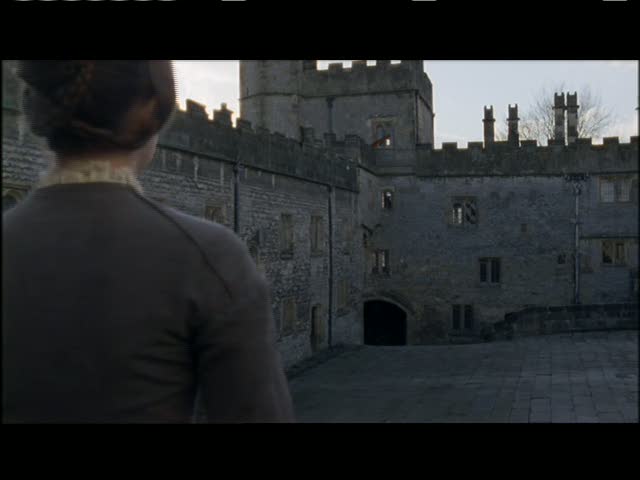 Thornfield is the third destination in Jane Eyre where she becomes a governess for a young girl named Adele. The descriptions of Thornfield are brighter and more lively, expressing that Jane is pleased by her current arrangements. However, things quickly turn awry when Jane discovers Rochester's wife is living in the attic. Suspense and superstition cause Jane to flea from Thornfield, only to return later to find that it has been burned down, along with all the secrets of Rochesters's past. It is this realization that causes Jane to return to Rochester, where they live quietly in peace at a Ferndead Manor.
The variations of setting throughout the novel force Jane to adapt to new settings. It seems that until the end, when she decides to marry Rochester and settle down, Jane has never had a "home sweet home" experience, yet she still seems to find the good in every situation.
From Rags to Riches
" I have now been married ten years. I know what it is to live entirely for and with what I love best on earth. I hold myself supremely blest—blest beyond what language can express; because I am my husband’s life as fully as he is mine. No woman was ever nearer to her mate than I am: ever more absolutely bone of his bone, and flesh of his flesh. All my confidence is bestowed on him, all his confidence is devoted to me; we are precisely suited in character—perfect concord is the result."
As one of the final passages in Charlotte Bronte's Jane Eyre, Jane's blatant change of heart and of mind are clearly expressed. The story of the stubborn heroin in this novel has always been seen as a "rags to riches" triumph, for where she began as a orphan servant, she ends as a happily married, wealthy woman. However, it is not the materialistic wealth that causes such a story to have a happy ending. It is the heartwarming evolution of a young girl who, however slowly, learns to love.
At the beginning of the novel, Jane appears to be a stubborn, independent young girl with a quick tongue. She loves to argue, yet keeps all other emotions locked away. Seemingly cold-hearted, Jane rejects the society- and everyone in it- that so harshly rejects her. Whether from sheer determination or the lack of a better plan, Jane finds her way through the maze of a tortured childhood, and emerges a different woman. Compassion has just begun to run it's course through her, and her walls are starting to crumble.
It is the upstanding, successful Edward Rochester that knocks Jane off her feet, and brings with it, all her inhibitions and anxieties. Over time, Rochester breaks into the heart of Jane Eyre, earning her trust, and eventually, her love. Jane's surrender to emotions that she has fought for so long can be seen as nothing but a beautiful triumph.
 This rages-to-riches tale is one to be envied, for Jane gained more in the end than most could only hope for.
As one of the final passages in Charlotte Bronte's Jane Eyre, Jane's blatant change of heart and of mind are clearly expressed. The story of the stubborn heroin in this novel has always been seen as a "rags to riches" triumph, for where she began as a orphan servant, she ends as a happily married, wealthy woman. However, it is not the materialistic wealth that causes such a story to have a happy ending. It is the heartwarming evolution of a young girl who, however slowly, learns to love.
At the beginning of the novel, Jane appears to be a stubborn, independent young girl with a quick tongue. She loves to argue, yet keeps all other emotions locked away. Seemingly cold-hearted, Jane rejects the society- and everyone in it- that so harshly rejects her. Whether from sheer determination or the lack of a better plan, Jane finds her way through the maze of a tortured childhood, and emerges a different woman. Compassion has just begun to run it's course through her, and her walls are starting to crumble.
It is the upstanding, successful Edward Rochester that knocks Jane off her feet, and brings with it, all her inhibitions and anxieties. Over time, Rochester breaks into the heart of Jane Eyre, earning her trust, and eventually, her love. Jane's surrender to emotions that she has fought for so long can be seen as nothing but a beautiful triumph.
This rages-to-riches tale is one to be envied, for Jane gained more in the end than most could only hope for. "We are rich only through what we give, poor only through what we refuse"
Ralph Waldo Emerson
Subscribe to:
Comments (Atom)